The Complete Guide to Making Garden Compost
What Is Garden Compost and Why Make Your Own
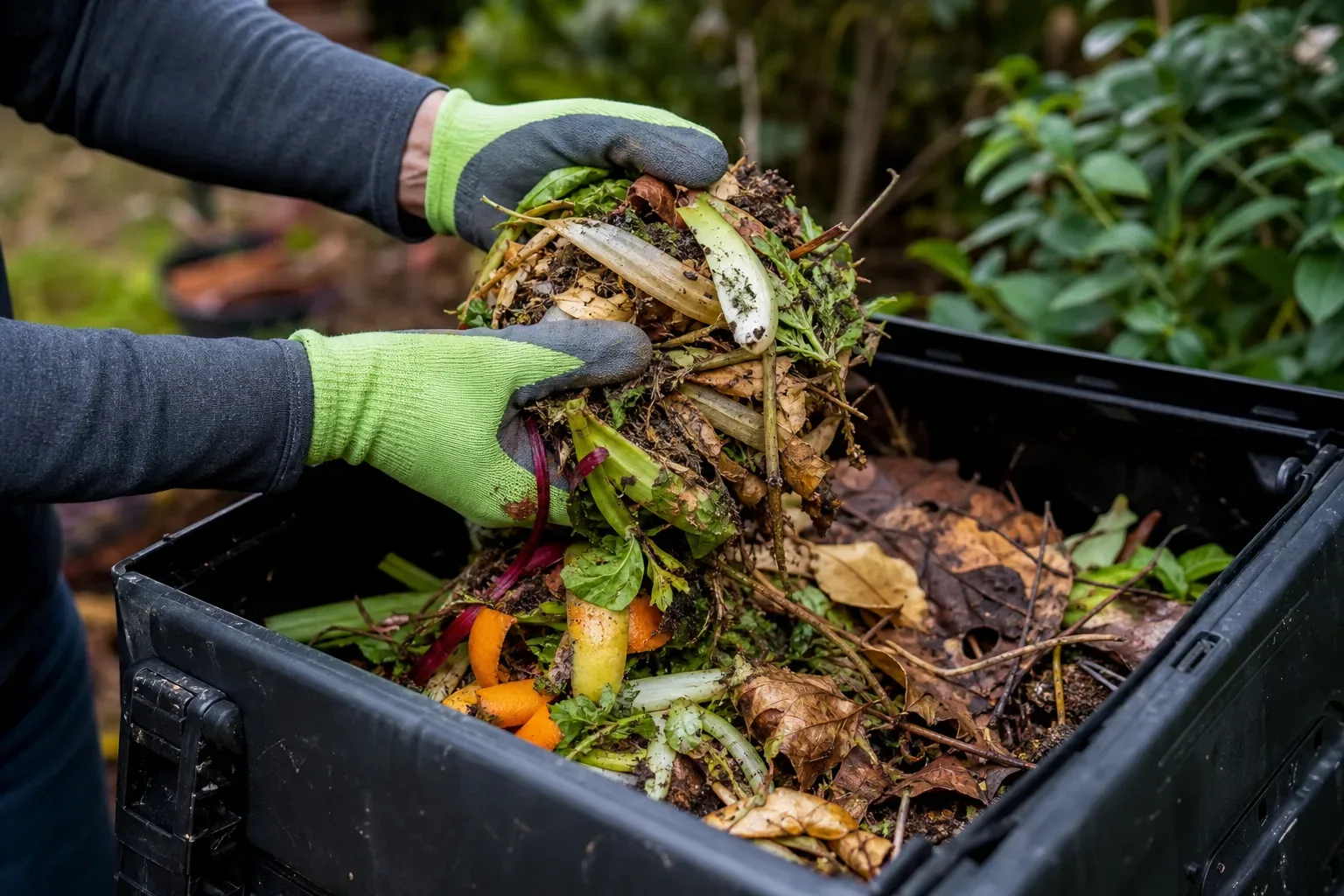
Garden compost is decomposed organic matter that improves soil structure, feeds plants, and reduces the need for synthetic fertilisers. Making it at home costs almost nothing and diverts kitchen and garden waste from landfill. The result is a dark, crumbly material often called "black gold" by gardeners, and for good reason: it can transform poor soil into a productive growing medium within months.
Choosing the Right Composting Method
Three main approaches suit different gardens and lifestyles. Picking the right one before you start saves frustration later.
Open Heap or Compost Bay
An open bay, built from timber pallets or bricks, suits gardeners with plenty of space and large volumes of garden waste. It allows good airflow and is easy to turn with a fork. A two- or three-bay system lets one heap mature while you fill another.
Enclosed Compost Bin
A plastic compost bin is the most common choice for smaller gardens. It retains heat and moisture, deters pests, and is inexpensive, with many councils offering subsidised bins. It produces compost more slowly than a hot heap but demands less effort.
Hot Composting
Hot composting uses a higher ratio of nitrogen-rich material and frequent turning to raise the core temperature to 55–70°C. At this range, weed seeds and pathogens are destroyed, and the process completes in as little as four to eight weeks. It requires more active management but delivers faster results.
How to Make Garden Compost - the Core Principles
Successful composting rests on four factors: the right balance of materials, adequate moisture, sufficient airflow, and appropriate particle size. Getting these right means the difference between rich compost in a few months and a cold, slimy heap that does nothing.
The Green-to-Brown Ratio
Every compost heap needs a balance of "greens" and "browns." Greens are nitrogen-rich: grass clippings, vegetable peelings, coffee grounds, and fresh plant trimmings. Browns are carbon-rich: cardboard, paper, dry leaves, straw, and woody stems. A rough ratio of one part greens to two or three parts browns by volume keeps the heap active without becoming wet and smelly.
If the heap smells of ammonia, it has too many greens. Add more browns and turn the heap. If it is dry and inactive, add greens and a little water.
What to Add and What to Avoid
Compostable materials:
- Fruit and vegetable scraps
- Grass clippings and annual weeds (before they set seed)
- Tea bags (plastic-free) and coffee grounds
- Cardboard and newspaper, torn into strips
- Fallen leaves
- Plant prunings, chopped small
- Eggshells
Avoid these materials:
- Cooked food and meat, which attract rats
- Dairy products and oily food
- Perennial weed roots such as bindweed or couch grass
- Diseased plant material, unless using a hot heap
- Cat and dog waste
- Glossy printed paper
Chipping or shredding woody material before adding it dramatically speeds breakdown. Whole branches can take years to rot without being cut.
Moisture and Aeration
The heap should feel like a wrung-out sponge: damp but not dripping. In dry summers, water the heap occasionally. In wet winters, cover it with a lid or sheet of cardboard to prevent waterlogging. Turning the heap every two to four weeks introduces oxygen, which feeds the aerobic bacteria responsible for fast decomposition.
Building Your First Heap
Start with a six-inch layer of coarse browns such as wood chips or scrunched cardboard at the base. This allows air to enter from below. Add alternating layers of greens and browns, keeping the green layers thinner. Water lightly if the material feels dry.
Continue adding material in layers rather than dumping large quantities of a single type. A heap that receives a barrow load of grass clippings with no browns will turn into a compacted, anaerobic mat. Mixing in torn cardboard or dry leaves whenever you add clippings prevents this.
Once the heap reaches a reasonable volume, ideally at least one cubic metre, it will generate enough internal heat to compost efficiently. Smaller heaps can still work but decompose more slowly.
Speeding Up the Process
Several practical steps accelerate decomposition without buying specialist products.
Activators add nitrogen and introduce beneficial microbes. Fresh nettles, comfrey leaves, and urine (diluted, applied directly to the heap) are free and highly effective. Commercial activators work but are rarely necessary if the green-to-brown balance is correct.
Chopping and shredding increases the surface area available to microbes. A garden shredder is a worthwhile investment for hedging trimmings and prunings. Alternatively, run a lawn mower over leaves before adding them.
Turning regularly is the single most effective action you can take. Moving material from the outer edges to the centre and introducing air can cut composting time by half.
Knowing When Compost Is Ready
Finished compost is dark brown, crumbly, and smells earthy, similar to woodland soil. Individual ingredients should no longer be identifiable, though some fibrous material such as twigs may need returning to the heap for another cycle.
The process typically takes three to six months in an active heap and six to twelve months in a passive bin. Compost harvested before it is fully mature can still be used as a mulch on top of soil, where it will continue breaking down in place.
How to Use Finished Compost
Dig two to three inches of compost into vegetable beds before planting to improve drainage in clay soils and water retention in sandy ones. Use it as a mulch around shrubs and perennials, keeping it clear of stems to prevent rot. Mix it into potting compost at around thirty percent by volume to make a nutritious growing medium for containers.
Compost also makes an excellent lawn top-dressing in autumn. Spread a thin layer, rake it in, and it will feed the turf and improve the soil beneath over the following months.
Common Problems and How to Fix Them
Heap Is Slimy and Smells Bad
Too many greens and too little air are the usual causes. Turn the heap thoroughly and add generous quantities of scrunched cardboard, dry leaves, or wood chips. Avoid adding more grass clippings until the balance is restored.
Heap Is Dry and Not Decomposing
The heap needs moisture and nitrogen. Water it well and add a batch of fresh greens such as grass clippings or vegetable scraps. Turn it to distribute moisture evenly.
Pests Are Getting In
Rats are attracted by cooked food and meat, so removing these from the waste stream is the most effective deterrent. A sturdy enclosed bin with a base, or a bay with hardware mesh lining, prevents access. Avoid adding bread and cooked carbohydrates if rodents are a persistent problem.
Heap Is Full of Flies
Fruit flies around a heap are harmless and normal during warm weather. Covering fresh additions of kitchen scraps with a layer of browns reduces fly activity. Soldier fly larvae, if they appear, are actually beneficial and accelerate breakdown.
Making Compost in Small Spaces
A standard garden bin fits comfortably in a space one metre square. Worm bins, also called vermicomposters, suit flats and small patios: they process kitchen scraps with minimal space and produce a concentrated liquid feed alongside solid castings. Bokashi systems ferment kitchen waste including meat and dairy in a sealed container, producing a pre-compost that can be dug directly into soil or added to a conventional heap to finish breaking down.
Frequently Asked Questions
How Long Does It Take to Make Garden Compost?
An actively managed hot heap can produce usable compost in four to eight weeks. A standard enclosed bin with regular turning takes three to six months. A passive heap with minimal intervention may take six to twelve months or longer, depending on the materials added and the season.
Can I Compost Cooked Food and Meat?
Standard open heaps and compost bins are not suitable for cooked food, meat, or dairy, as these attract rats and can create unpleasant odours. A bokashi fermentation system is designed to handle these materials safely, fermenting them in a sealed, airtight container before they are added to soil or a conventional heap.
What Is the Best Activator for a Compost Heap?
Fresh nettles, comfrey leaves, and diluted urine are among the most effective free activators because they supply concentrated nitrogen. If the green-to-brown ratio in the heap is already well balanced, no additional activator is needed. Commercial activators can help in very cold conditions when microbial activity slows.
Why Is My Compost Heap Not Heating Up?
A cold, inactive heap usually lacks nitrogen-rich green materials, moisture, or volume. Ensure the heap is at least one cubic metre in size, add a batch of fresh greens such as grass clippings, water it if it feels dry, and turn it to introduce oxygen. Cold winter temperatures also slow microbial activity, so some slowdown between November and February is normal.
Can I Make Compost Without a Garden?
Yes. A worm bin processes kitchen scraps and fits on a balcony or in a small outdoor area, producing both worm castings and a liquid feed. A bokashi bucket works indoors and handles a wider range of food waste than a conventional heap. Both systems are practical options for flats and homes without outdoor space.